On air since 1976

Fifty years of broadcasting hope.

Founded in 1976, TWR Kenya has grown from a single transmitted signal into 7 stations carrying 15+ languages across the country — 50 years on air, and counting.

Tune through the decades
The Signal, Decade by Decade

Fifty years of transmission, decade by decade — some chapters written, some still being told.

70s

1974 – 1979

Signal found.

TWR's ministry reaches Africa for the first time in 1974, broadcasting from a transmitter in Eswatini (then Swaziland). Two years later, in 1976, TWR Kenya is founded by Rev. Stephen Boakye Yiadom — only the second TWR operation on the continent, joining a broadcasting family begun in 1952 when Dr. Paul E. Freed sent TWR's first signal out from Tangier, Morocco.

Read the full story

Stephen arrived in Nairobi by way of Ghana and Germany. Hoping first to study accountancy in the United States, then dreaming of professional football in a country famous for the game, he ended up in Bible school instead — steered there by Mrs. Herta Wojahn, a German woman who took in foreign students and treated him like a son. She also introduced him to Evangeliums Rundfunk (ERF), the Christian broadcaster that would later send him to pioneer TWR's work across Africa.

Nairobi was chosen as the base for continent-wide programme production: Kenya was politically stable under President Jomo Kenyatta, centrally located, internationally connected, and open to the gospel. TWR itself was still broadcasting by shortwave from Manzini, Swaziland — Kenya at the time had only one broadcaster, the government-owned Voice of Kenya.

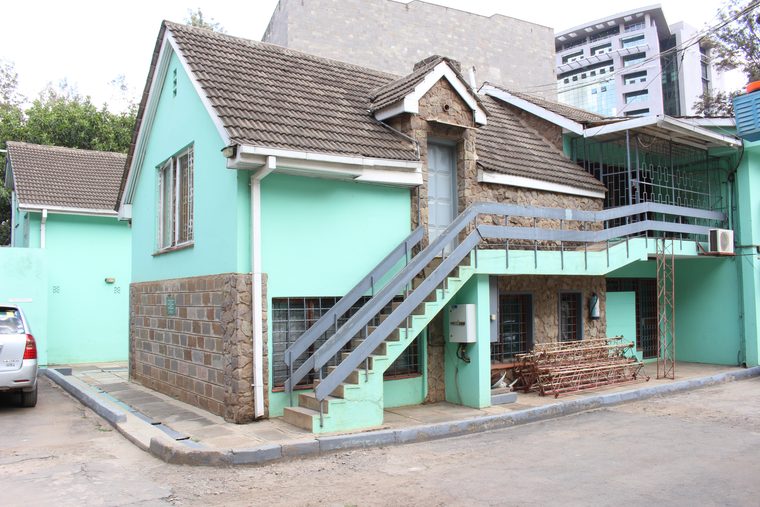
Stephen's first task was mundane: finding a house. The one he found in Adams Arcade became home, office and studio all at once. He recruited an interdenominational board — including Rev. Johana Mbogori of the Methodist Church of Kenya and Bishop Birech of the African Inland Church — to lend the new ministry credibility. Programmes were produced entirely by hand: scripts typed, sermons recorded to reel-to-reel tape, edits made by physically cutting and splicing the reel.

As the work grew, Pastor David Mbugua Mungai became the ministry's first employee, and young broadcasters Chris Basalirwa and Kwame Rubadiri joined to build youth programming. Outgrowing Adams Arcade, the team moved into offices at Ufanisi House on Haile Selassie Avenue.
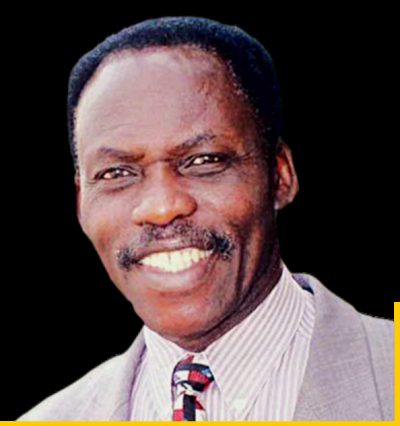
Photo coming soon — the Adams Arcade house, 1976
80s

1980 – 1989

Kamburu Drive, and the first Africa-wide programmes.

The ministry moves into its first dedicated studios and, amid famine in Ethiopia, begins programmes that would define a generation of African Christian radio.

Read the full story

Continued growth pushed the ministry into a larger home on Kamburu Drive, off Ngong Road, converted into proper recording studios and offices. A young man named Boaz Otiende Olewe impressed the team during the renovation and was taken on as caretaker.

When famine struck Ethiopia in the early 1980s, TWR's founder Dr. Paul Freed launched Africa Challenge, a programme addressing food security and development from a Christian perspective. Youth shows Breakthrough and New Dimension found a wide following, Bible-teaching programmes Powerline and Words of Hope became well known, and the Swahili broadcast Kua Katika Imani drew a particularly strong audience in Tanzania.

Around this time, Stephen returned briefly to Ghana to marry Grace, who joined him in Kenya and became known to the ministry as "Mama Herta." In Germany, Mrs. Herta Wojahn — the woman who had first pointed Stephen toward Bible school — kept supporting the work from afar through prayer and gifts, including a Christmas present for every member of staff.

Photo coming soon — the Kamburu Drive studio
90s

1990 – 1999

A continent-wide ministry needs a regional home.

As TWR's work multiplies across Africa, Stephen steps up to lead the whole region — and Kenya gets its first National Director.

Read the full story

TWR's expansion across the continent eventually needed its own regional structure. Stephen was appointed International Director for Africa. After the end of apartheid and Nelson Mandela's election in 1994, South Africa became the natural choice for a regional office, and Stephen relocated his family to Kempton Park, Johannesburg, to lead it.

Leadership of the Kenya office passed to Kwame Rubadiri, who became TWR Kenya's first National Director; his wife Emmy Rubadiri, who had been leading the youth ministry, stepped aside as he took on the role.

Photo coming soon — Kwame Rubadiri, first National Director
00s

2000 – 2009

A season of transition.

Leadership of TWR Kenya changes hands twice in this decade, as the ministry looks for the person to carry it into the FM era.

Read the full story

When Kwame Rubadiri relocated to the United States, Dr. Stephen Njiro became National Director, though his tenure was relatively brief. He was succeeded by Rev. Daniel Serwanga, who had previously served on TWR Kenya's board.

Photo coming soon — the TWR Kenya studio team, early 2000s
10s

2010 – 2019

Tuning wider.

Following Rev. Serwanga, Dr. Bernice Gatere becomes National Director just as FM radio is transforming Kenyan broadcasting. In 2017, under her leadership, TWR Kenya is granted seven FM broadcasting frequencies — the seed of a home-grown station network. A nationwide fundraising campaign follows, raising funds to build dedicated studios and transmitters for the years ahead.

Photo coming soon — Dr. Bernice Gatere at the FM licence signing, 2017
20s

2020 – 2026

SIFA FM, and the Golden Jubilee.

Construction begins on new broadcast facilities in 2020. Soon after, the SIFA FM network goes on air in underserved counties — Lamu, Marsabit, Voi, Garissa and Lodwar — carrying Scripture into places radio rarely reaches. Alongside SIFA FM, the family grows to include Powerline Radio, Atoo FM, Maata Radio and Hekima FM. Today TWR Kenya broadcasts in 15+ languages across 7 stations. Dr. Njoki Chege joins Twr Kenya as Executive Director in 2025 and in November 2026, marks its Golden Jubilee: fifty years of broadcasting hope.

Photo coming soon — Sifa FM
Join us in the next Fifty Years with your support

Here's to the next fifty.

TWR Kenya's full story every studio, every language, every life changed is being documented for our Golden Jubilee in November 2026. Join us as we look back, and tune in for what's next.

Donate